Someone who read my last blog asked if I was familiar with the website Valid People. I was instantly reminded of a conversation I once had with a fellow employee at the police department:
“You know those buses that have invalid on the side of them – what does that mean?”
I thought he was joking and answered, “It means they’re not really there.”
“No really, does it ever bother you to be referred to as an invalid?”
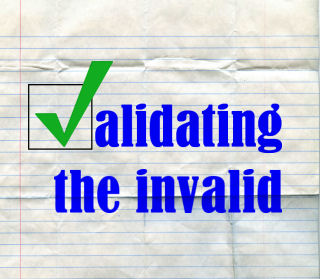
I thought about it a bit before replying, “The word itself is not the problem but what it connotes is. Valid means having some foundation; based on truth. Invalid means not valid and is used to describe disabled people as being unable. Granted there are some things people with a disability cannot do and there are people who are too disabled to do anything. However by writing invalid on buses or public bathrooms, connotes that ALL people with a disability are unable. This in itself is an untrue statement that needs to be validated.”
Nicolette Mak has cleverly named her website Valid People and is validating the fact that people with disabilities are able to obtain gainful employment. She uses the phrase “cumbrous body” to describe people who have a physical disability. As a strong believer in the abilities of the disabled, she has set up the Valid People website as an employment resource for those who have a “cumbrous body” and want to work. It is a kind of online employment agency where employment opportunities are posted for various businesses that are looking to hire as well as solicitations from those who are looking to be hired.
Although after a year of trying to obtain gainful employment and getting off the emotional rollercoaster by committing myself to writing a book, I contacted Nicolette. I wanted her opinion of my blog and my situation. Her response was positive and she suggested I enroll in her website. Her offer was very much appreciated but since nothing comes with a guarantee and my decision to write was made, I declined.
Though I have come to terms with my employment status, I can’t help but wonder why the institutions that I contacted didn’t know about the Valid People website. Therefore, I am hoping this blog will generate positive opportunities for those with a “cumbrous body” and employers looking to hire.
Saturday, March 5, 2011
Sunday, January 16, 2011
It's All About Money
Those who know me know that I have worked whenever I could. As a teenager I took on my first “job” when my parents sent me to camp for a six week summer vacation. The dining room staff needed people to set tables before each meal and clean them up afterwards. Ten dollars a week could be made if we did the Job. Sure I was on vacation but money was money! Every morning those campers on the dining room crew were woken an hour before the other campers and went to work set plates, silverware, and condiments needed for the most important meal of the day.
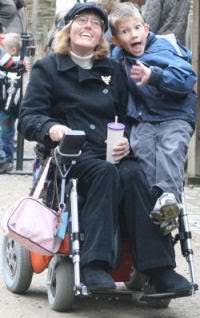
We’ve all been to a restaurant at one time or another – how often have we seen a busboy/busgirl with a disability let alone one in a wheelchair? A busgirl in a wheelchair is what I was for those six weeks. I didn’t need a cart – I had a lap full of dishes that were placed on the table as I wheeled around to each seat. When my lap was empty I did the same with the silverware and condiments. Of course all this needed to be done in a timely fashion as the dining room would soon after be filled with hungry campers. I enjoyed the work and did it for three consecutive summers.
My parents were used to my money-making schemes. When I was ten, I collected newspapers from neighbors until the back of our garage was full. My father was the one to help me tie them into bundles, load the car and drive them and me to the “junkie”. At the junkyard we unloaded the car by putting the bundles onto a cart that was weighed. My wages depended on how heavy the thousands pieces of paper were. We did this until the price of gas outweighed the newspapers.
The high school I attended had a summer work program for its disabled students. This program allowed those of us with a disability to be intergraded into the work force while gaining paid for work experience. There were several job sites to choose from - a park, a hospital and an office setting. My first summer in the program, I chose to work as a librarian in a hospital library. The job requirement of shelving and checking books in and out was not a problem for me as I was able to reach the high shelves by standing from my wheelchair. The following year I chose to do something different and went to work for the Parks Department. The Park for All Children had just been built and needed employees to supervise children at play. It was built to be totally handicap accessible so children in wheelchairs could get around easily and play with everything – even the sandboxes. In my electric wheelchair I was able to maneuver everywhere and was able to supervise the children at play as well as run group activities for them. After my second summer there, I was offered a year-round position which I took. Although the park was closed in the winter months, I and a fellow employee (non-disabled) went to various neighborhood schools with puppets known as The Kids On The Block to teach non-disabled children about disabilities. I did this until my family and I moved making the commute too far. Besides, I wanted to become a writer.
As a prerequisite to becoming a writer I needed four years of college to study English. The first year was financed by my parents, a scholarship and student loans. In the second, I decided that if all the other students had a part-time job to get through college, I could too. The man who ran the college’s cafeteria and I became friends but when I solicited him for a job he thought I was kidding. He laughed and said, “Ha you in a cafeteria!” When I told him I had experience in setting and clearing tables he stopped laughing and said, “Ok. We can try it.” Two weeks later I was the one working the most hours.
A student of English definitely needs to write many term papers and articles for the school’s newspaper, so I spent many hours in the computer lab of my college library. I enjoy helping people so when someone had a computer related problem, I tried to help. Since I was doing this just about every day, the head librarian offered me a paid position of “tutor”. I was paid bi-weekly as part of a student aid program the school had. I then had two jobs and was going to school.
After I graduated with a degree I did some volunteer writing for the newsletter of Suffolk County’s Independent Living Center. SILO advocates for people with disabilities and helps them live independently in their community. It was when I landed an interview with actress Geri Jewell that I was offered the position of the newsletter’s editor position. Since SILO is a non-profit organization so they could not pay me but I took the position as a way of gaining work experience.
The paid position came when I went to work for the Nassau County Police Department as an Inventory Custodian. Nassau County of New York had been given money to hire twenty disabled employees. This was done as an incentive to get disabled people to participate in the economy. I and a police officer kept records of everything the department bought and its surplus through data entry of assigned numbers, serial numbers, model numbers and locations. When something was thrown away we travelled to the junkyard to ensure it was gotten rid of properly. I was employed with the county for twelve years before retiring (you needed ten years to qualify for a pension) and moving to the Netherlands.
When I moved to the Netherlands my husband had the benefit of being able to take me along to work with him. I didn't know anyone or the language and he didn’t want me to be alone all day. I always took my laptop along so I could write and develop my website Martensnetwork. When his boss saw I knew how to use a computer, she offered me a job as a Data Analyst and Editor. I worked in his office for three months until I became pregnant with our son. I didn't want to work after he was born. I think a mom should be home to raise the children whenever possible. I also believe children should never come home to a locked door.
Instead of working, my days were spent taking care of our son. My sister was the one who took me everywhere. She lived here ten years before I did. Unfortunately just when I was living here two years, she died and our son was still small so I needed to be home all the time. When he turned seven he was independent enough for me to spend one day a week at a recreation center for the disabled. Before the center could accept me, I needed to be "certified". That means the local government office had to give their approval. I had to go to their doctor who said yes I would benefit from the center (mentally). I now go to the center one and a half days a week. On the days that I’m there, my husband works from home. I enjoy making things there (ceramics and wood working) but what it has to do with my mental health who knows. I am just as happy home.
Every few years, the participants of the recreation center need to be recertified by the government. The recertification office called our home to verify their paperwork and got my husband on the line. I happened to be at the center that day. As they were discussing me it seemed to him like they were talking about a whole other person. They were under the impression I didn't know how to handle money, they said I could eat by myself and needed help in the bathroom which is the other way around – I need help eating and can go to the bathroom on my own. Once my husband corrected everything with them, they asked him why I didn't work. He said I wanted to go back to work but didn't know how to go about it since I didn't receive the government’s “unfit to work” benefit.
Disabled people can apply for an “unfit to work” benefit provided they are Dutch and have lived in the Netherlands prior to their seventeenth birthday. The government is now running out of money to pay out this benefit so as an incentive to save money they are trying to get employers to hire these disabled people. The (full) benefit is no longer paid to the disabled person when the employer is paying them a salary. The employer however does not directly communicate with the person wanting a job. In the Netherlands there are organizations that serve as mediators that help people with a disability find a job, arrange for whatever they need to do the job and make sure the employee and employer are satisfied with one another. The person on the phone referred us to such an organization and said they were only recertifying me for a year. If in that year I could not find a job, they would certify me four.
My husband immediately called this organization and explained to the secretary that I had Cerebral Palsy and wanted to work. Her answer was, “And what are we supposed to do with her?” After four months of waiting I was assigned a case worker who was very nice and really wanted to help me find a job but her resources were limited. Since I did not receive any governmental benefits, someone in her office suggested I apply for the “unfit to work” benefit. I was turned down for this benefit because although I am now Dutch, I did not live in the Netherlands before my seventeenth birthday.
Strike one.
The next suggestion we got was to register online with a local job finding office. The case worker came to my home and we spent an afternoon filling in the online registration form. When we got to the end of it there was a message on the screen saying we needed to call their office within twenty-four hours in order for the registration to be considered valid. Since it was late in the day she called first thing the next day and fully explained my situation. She was told we should come to their offices whenever convenient we didn’t need an appointment. We went there a week later. My husband could not transport me as he needed to go to work so I took a seventy-five minute taxi ride to the office building that was twenty minutes from my house. When we got there we were told the job coach that handles the requests of people with disabilities wasn't there and couldn't help me anyway because I don't receive benefits. The government would not save money by getting me a job, so I wasn't interesting for them.
Strike two.
The woman at the job coaching office thought I could get enrolled in a program under the WsW (social employment policy act) that gives jobs to disabled people but placement could take up to four year waiting list for placement. This program turned out not to be for me.
I was also told there was no guarantee that I would get the type of employment I wanted and could wind up working in a type of “warehouse” situation - with other disabled people for minimum wages with no advancement. I had just thrown away €10.00 to hear all this. Meanwhile, a job coach receives money from the government to find people jobs but me they can't help.
My case worker couldn't believe this either and went to a woman who had her own “re-integration” office to see if she could help me. They both came to my home with a positive attitude towards my working. Her first priority though was to go to the government on the city level to see if they would release funds to me a “Nugger”. A “Nugger” is someone who is not entitled to the “unfit to work” benefit.
A month after our meeting I received the following letter:
Till last Thursday I have been dealing with the city, to find out if there would be any possibilities for a re-integration budget within the framework of so called “Nugger status” (person not entitled to an allowance).
I had phone calls with a number of people who have to do with all aspects of re-integration, thus short-term routes as well as long-term routes. I presented your case Christine, and regrettably it is impossible to generate a re-integration budget. Reasons are: the distance to the job market and to independent participation are estimated too big.
The city of Heerlen knows of a project “Pioneering Work” in which people with long distances to the job market, participates in projects with the principle of preservation of their allowance. However, I had a conversation with someone who has a project with Humanitas (taking care of children for which the physical condition is of importance) and a neighborhood route where volunteers among other things hang up a painting in people’s homes and go out shopping with people. Considering your physical limitation, your mobility and the “voluntary character” of these projects, this is not an option.
Again the question arose whether you were signed up for/familiar with the WsW (social employment policy act). This would be most applicable for you. I indicated that you would rather not make use of the WsW and also that you would not like to work on a voluntary basis but with a contract of employment.
I hate to say it, but there are currently no funds available, Christine for your re-integration.
With kind regards,
Strike three!
She was right – I did not want to wait four years to see where I might wind up nor did I want to waste my time and money taking tests and getting results to what I already knew. I have Cerebral Palsy and can be successfully and gainfully emloyed.
As for working on a voluntary basis – I have been doing that for the last four years at my son’s school and therefore was not looking for more volunteer work. Volunteer work is exactly what the disabled people who do receive governmental benefits do. Here it all comes down to having some kind of government benefit before anyone can help you.
What am I doing now - I am still going to the recreation center. I was recertified for another four years. In June 2010 I decided to write a book about me and my son. I hope to be done sometime in 2012.
We’ve all been to a restaurant at one time or another – how often have we seen a busboy/busgirl with a disability let alone one in a wheelchair? A busgirl in a wheelchair is what I was for those six weeks. I didn’t need a cart – I had a lap full of dishes that were placed on the table as I wheeled around to each seat. When my lap was empty I did the same with the silverware and condiments. Of course all this needed to be done in a timely fashion as the dining room would soon after be filled with hungry campers. I enjoyed the work and did it for three consecutive summers.
My parents were used to my money-making schemes. When I was ten, I collected newspapers from neighbors until the back of our garage was full. My father was the one to help me tie them into bundles, load the car and drive them and me to the “junkie”. At the junkyard we unloaded the car by putting the bundles onto a cart that was weighed. My wages depended on how heavy the thousands pieces of paper were. We did this until the price of gas outweighed the newspapers.
The high school I attended had a summer work program for its disabled students. This program allowed those of us with a disability to be intergraded into the work force while gaining paid for work experience. There were several job sites to choose from - a park, a hospital and an office setting. My first summer in the program, I chose to work as a librarian in a hospital library. The job requirement of shelving and checking books in and out was not a problem for me as I was able to reach the high shelves by standing from my wheelchair. The following year I chose to do something different and went to work for the Parks Department. The Park for All Children had just been built and needed employees to supervise children at play. It was built to be totally handicap accessible so children in wheelchairs could get around easily and play with everything – even the sandboxes. In my electric wheelchair I was able to maneuver everywhere and was able to supervise the children at play as well as run group activities for them. After my second summer there, I was offered a year-round position which I took. Although the park was closed in the winter months, I and a fellow employee (non-disabled) went to various neighborhood schools with puppets known as The Kids On The Block to teach non-disabled children about disabilities. I did this until my family and I moved making the commute too far. Besides, I wanted to become a writer.
As a prerequisite to becoming a writer I needed four years of college to study English. The first year was financed by my parents, a scholarship and student loans. In the second, I decided that if all the other students had a part-time job to get through college, I could too. The man who ran the college’s cafeteria and I became friends but when I solicited him for a job he thought I was kidding. He laughed and said, “Ha you in a cafeteria!” When I told him I had experience in setting and clearing tables he stopped laughing and said, “Ok. We can try it.” Two weeks later I was the one working the most hours.
A student of English definitely needs to write many term papers and articles for the school’s newspaper, so I spent many hours in the computer lab of my college library. I enjoy helping people so when someone had a computer related problem, I tried to help. Since I was doing this just about every day, the head librarian offered me a paid position of “tutor”. I was paid bi-weekly as part of a student aid program the school had. I then had two jobs and was going to school.
After I graduated with a degree I did some volunteer writing for the newsletter of Suffolk County’s Independent Living Center. SILO advocates for people with disabilities and helps them live independently in their community. It was when I landed an interview with actress Geri Jewell that I was offered the position of the newsletter’s editor position. Since SILO is a non-profit organization so they could not pay me but I took the position as a way of gaining work experience.
The paid position came when I went to work for the Nassau County Police Department as an Inventory Custodian. Nassau County of New York had been given money to hire twenty disabled employees. This was done as an incentive to get disabled people to participate in the economy. I and a police officer kept records of everything the department bought and its surplus through data entry of assigned numbers, serial numbers, model numbers and locations. When something was thrown away we travelled to the junkyard to ensure it was gotten rid of properly. I was employed with the county for twelve years before retiring (you needed ten years to qualify for a pension) and moving to the Netherlands.
When I moved to the Netherlands my husband had the benefit of being able to take me along to work with him. I didn't know anyone or the language and he didn’t want me to be alone all day. I always took my laptop along so I could write and develop my website Martensnetwork. When his boss saw I knew how to use a computer, she offered me a job as a Data Analyst and Editor. I worked in his office for three months until I became pregnant with our son. I didn't want to work after he was born. I think a mom should be home to raise the children whenever possible. I also believe children should never come home to a locked door.
Instead of working, my days were spent taking care of our son. My sister was the one who took me everywhere. She lived here ten years before I did. Unfortunately just when I was living here two years, she died and our son was still small so I needed to be home all the time. When he turned seven he was independent enough for me to spend one day a week at a recreation center for the disabled. Before the center could accept me, I needed to be "certified". That means the local government office had to give their approval. I had to go to their doctor who said yes I would benefit from the center (mentally). I now go to the center one and a half days a week. On the days that I’m there, my husband works from home. I enjoy making things there (ceramics and wood working) but what it has to do with my mental health who knows. I am just as happy home.
Every few years, the participants of the recreation center need to be recertified by the government. The recertification office called our home to verify their paperwork and got my husband on the line. I happened to be at the center that day. As they were discussing me it seemed to him like they were talking about a whole other person. They were under the impression I didn't know how to handle money, they said I could eat by myself and needed help in the bathroom which is the other way around – I need help eating and can go to the bathroom on my own. Once my husband corrected everything with them, they asked him why I didn't work. He said I wanted to go back to work but didn't know how to go about it since I didn't receive the government’s “unfit to work” benefit.
Disabled people can apply for an “unfit to work” benefit provided they are Dutch and have lived in the Netherlands prior to their seventeenth birthday. The government is now running out of money to pay out this benefit so as an incentive to save money they are trying to get employers to hire these disabled people. The (full) benefit is no longer paid to the disabled person when the employer is paying them a salary. The employer however does not directly communicate with the person wanting a job. In the Netherlands there are organizations that serve as mediators that help people with a disability find a job, arrange for whatever they need to do the job and make sure the employee and employer are satisfied with one another. The person on the phone referred us to such an organization and said they were only recertifying me for a year. If in that year I could not find a job, they would certify me four.
My husband immediately called this organization and explained to the secretary that I had Cerebral Palsy and wanted to work. Her answer was, “And what are we supposed to do with her?” After four months of waiting I was assigned a case worker who was very nice and really wanted to help me find a job but her resources were limited. Since I did not receive any governmental benefits, someone in her office suggested I apply for the “unfit to work” benefit. I was turned down for this benefit because although I am now Dutch, I did not live in the Netherlands before my seventeenth birthday.
Strike one.
The next suggestion we got was to register online with a local job finding office. The case worker came to my home and we spent an afternoon filling in the online registration form. When we got to the end of it there was a message on the screen saying we needed to call their office within twenty-four hours in order for the registration to be considered valid. Since it was late in the day she called first thing the next day and fully explained my situation. She was told we should come to their offices whenever convenient we didn’t need an appointment. We went there a week later. My husband could not transport me as he needed to go to work so I took a seventy-five minute taxi ride to the office building that was twenty minutes from my house. When we got there we were told the job coach that handles the requests of people with disabilities wasn't there and couldn't help me anyway because I don't receive benefits. The government would not save money by getting me a job, so I wasn't interesting for them.
Strike two.
The woman at the job coaching office thought I could get enrolled in a program under the WsW (social employment policy act) that gives jobs to disabled people but placement could take up to four year waiting list for placement. This program turned out not to be for me.
I was also told there was no guarantee that I would get the type of employment I wanted and could wind up working in a type of “warehouse” situation - with other disabled people for minimum wages with no advancement. I had just thrown away €10.00 to hear all this. Meanwhile, a job coach receives money from the government to find people jobs but me they can't help.
My case worker couldn't believe this either and went to a woman who had her own “re-integration” office to see if she could help me. They both came to my home with a positive attitude towards my working. Her first priority though was to go to the government on the city level to see if they would release funds to me a “Nugger”. A “Nugger” is someone who is not entitled to the “unfit to work” benefit.
A month after our meeting I received the following letter:
Till last Thursday I have been dealing with the city, to find out if there would be any possibilities for a re-integration budget within the framework of so called “Nugger status” (person not entitled to an allowance).
I had phone calls with a number of people who have to do with all aspects of re-integration, thus short-term routes as well as long-term routes. I presented your case Christine, and regrettably it is impossible to generate a re-integration budget. Reasons are: the distance to the job market and to independent participation are estimated too big.
The city of Heerlen knows of a project “Pioneering Work” in which people with long distances to the job market, participates in projects with the principle of preservation of their allowance. However, I had a conversation with someone who has a project with Humanitas (taking care of children for which the physical condition is of importance) and a neighborhood route where volunteers among other things hang up a painting in people’s homes and go out shopping with people. Considering your physical limitation, your mobility and the “voluntary character” of these projects, this is not an option.
Again the question arose whether you were signed up for/familiar with the WsW (social employment policy act). This would be most applicable for you. I indicated that you would rather not make use of the WsW and also that you would not like to work on a voluntary basis but with a contract of employment.
I hate to say it, but there are currently no funds available, Christine for your re-integration.
With kind regards,
Strike three!
She was right – I did not want to wait four years to see where I might wind up nor did I want to waste my time and money taking tests and getting results to what I already knew. I have Cerebral Palsy and can be successfully and gainfully emloyed.
As for working on a voluntary basis – I have been doing that for the last four years at my son’s school and therefore was not looking for more volunteer work. Volunteer work is exactly what the disabled people who do receive governmental benefits do. Here it all comes down to having some kind of government benefit before anyone can help you.
What am I doing now - I am still going to the recreation center. I was recertified for another four years. In June 2010 I decided to write a book about me and my son. I hope to be done sometime in 2012.
Friday, April 2, 2010
Minority Wins the Majority
Today my nine year old son reminded me that I was in such awe when Burack Obama won the presidency that I wrote the following:
My parents always warned me never to discuss religion or politics as those were the two issues that divided the world the most. I don’t know if their telling me this makes me reluctant to write this but my head and heart is so full of things I need to express. I am in total awe - awe at the fact that I am living a historical moment in America’s history. There were always the moments in time that I watched television coverage of like the Twin Towers being destroyed and thousands of lives changed forever, but when you witness a change from the history that you’ve learned and read about in school, that is awesome! It’s like a pop-up book you’re reading the story and boom an image jumps out at you that changes your interpretations of what you’ve just read.
In history class thirty years ago, I read about slavery that lasted from 1607 until 1865. Over two-hundred years of people being treated like animals because of their skin color. The beatings they received when their white master was not satisfied with their work. How they were sold from one person to another as if they were a possession. How in 1860 fifteen states of the United States of America found the behavior to be legal, just and in accordance with the Constitution written by the founding fathers until Abraham Lincoln pushed the thirteenth amendment through congress.
Although there was an amendment that ended slavery after the Civil War, fifteen states prohibited blacks from voting. Right were given to blacks by the United states with the fourteenth amendment but states tested those rights by demanding blacks take a writing test before voting. Of course they could not pass because they did not have the education whites did. They were segregated from government services. In order to keep black people from mainstreaming into the white America segregated schools and transportation were setup especially for them.
I remember reading about the blacks on the bus who were not allowed to sit in the front of the bus because they had dark skin. About Irene Morgan, the twenty-seven year old black woman who in 1944 had the courage to defy the interstate bus driver who ordered her to give up her seat to make room for a white passenger. The driver drove her to the sheriff where she resisted arrest by tearing up the arrest warrant and kicking him in the groin. She was forced off the bus and jailed. Rosa Louise McCauley Parks the black woman also arrested for not giving up her seat on a bus for a white passenger joined Martin Luther King in the Montgomery Bus Boycott a year-long protest against Montgomery, Alabama’s policy of racial segregation on its public transportation system. This boycott led to the United States Supreme Court declaring the Montgomery segregated bus laws unconstitutional.
From the Montgomery boycott a civil rights leader was born. Martin Luther King, the pastor arrested, whose house was bombed and who was subjected to personal abuse. After winning the boycott, he became the first president of the Southern Christian Leadership conference in 1957. He raised public consciousness of the civil rights movement when he delivered his I Have A Dream speech at the 1963 March on Washington for Jobs and Freedom. He had the simple dream of having everyone regardless of color or creed, live together in a united world not a divided one.
The history books told of the assassinations of all who fought for the civil rights of Americans - Abraham Lincoln, Martin Luther King and John F. Kennedy. Three days ago the newspapers told of the passing of Madelyn Dunham, the woman who had a direct impact on one black man’s life. I couldn’t help but wonder if her passing was a sign that she and all the spirits before her had arrived and they were now standing tall and proud next to the first black man who won the 44th presidency of the United States. They help Barack Obama live the American dream.
On November 4, 2008 my pop-up book image came from my television at the early hours of the morning here in the Netherlands. There was Barack Obama my new president, standing at the podium in Chicago, Illinois thanking the American people. This image changed my heart and way of thinking.
During the past eight years I had lost my faith in the American voting system. I was terrorized the morning four airplanes flew into the New York monuments of the state where I was born and raised. I was then terrified each Christmas season after at the thought of having to fly home to my parents. I was so angered and frustrated by a senseless war that my motto had become “I am an American proud to be living in the Netherlands”. The love for a Dutch man I met through the internet caused me to settle here but America will always be my first home.
The chanting of yes we can reminded me of all the people who told this disabled white woman with Cerebral Palsy you won’t or you can’t and then I look at my healthy eight year old son and think - The “Minority” Wins the Majority! A true happy ending for us all! Or is it just the beginning - all I know is you have to believe in order to achieve!
A year and a half later thousands of miles from the United States, my son wrote "yes we can" on a paper he wrote about whether or not his school could raise money to build a library in Guatamala. It just goes to show how much impact three words from one man can have on the world!
My parents always warned me never to discuss religion or politics as those were the two issues that divided the world the most. I don’t know if their telling me this makes me reluctant to write this but my head and heart is so full of things I need to express. I am in total awe - awe at the fact that I am living a historical moment in America’s history. There were always the moments in time that I watched television coverage of like the Twin Towers being destroyed and thousands of lives changed forever, but when you witness a change from the history that you’ve learned and read about in school, that is awesome! It’s like a pop-up book you’re reading the story and boom an image jumps out at you that changes your interpretations of what you’ve just read.
In history class thirty years ago, I read about slavery that lasted from 1607 until 1865. Over two-hundred years of people being treated like animals because of their skin color. The beatings they received when their white master was not satisfied with their work. How they were sold from one person to another as if they were a possession. How in 1860 fifteen states of the United States of America found the behavior to be legal, just and in accordance with the Constitution written by the founding fathers until Abraham Lincoln pushed the thirteenth amendment through congress.
Although there was an amendment that ended slavery after the Civil War, fifteen states prohibited blacks from voting. Right were given to blacks by the United states with the fourteenth amendment but states tested those rights by demanding blacks take a writing test before voting. Of course they could not pass because they did not have the education whites did. They were segregated from government services. In order to keep black people from mainstreaming into the white America segregated schools and transportation were setup especially for them.
I remember reading about the blacks on the bus who were not allowed to sit in the front of the bus because they had dark skin. About Irene Morgan, the twenty-seven year old black woman who in 1944 had the courage to defy the interstate bus driver who ordered her to give up her seat to make room for a white passenger. The driver drove her to the sheriff where she resisted arrest by tearing up the arrest warrant and kicking him in the groin. She was forced off the bus and jailed. Rosa Louise McCauley Parks the black woman also arrested for not giving up her seat on a bus for a white passenger joined Martin Luther King in the Montgomery Bus Boycott a year-long protest against Montgomery, Alabama’s policy of racial segregation on its public transportation system. This boycott led to the United States Supreme Court declaring the Montgomery segregated bus laws unconstitutional.
From the Montgomery boycott a civil rights leader was born. Martin Luther King, the pastor arrested, whose house was bombed and who was subjected to personal abuse. After winning the boycott, he became the first president of the Southern Christian Leadership conference in 1957. He raised public consciousness of the civil rights movement when he delivered his I Have A Dream speech at the 1963 March on Washington for Jobs and Freedom. He had the simple dream of having everyone regardless of color or creed, live together in a united world not a divided one.
The history books told of the assassinations of all who fought for the civil rights of Americans - Abraham Lincoln, Martin Luther King and John F. Kennedy. Three days ago the newspapers told of the passing of Madelyn Dunham, the woman who had a direct impact on one black man’s life. I couldn’t help but wonder if her passing was a sign that she and all the spirits before her had arrived and they were now standing tall and proud next to the first black man who won the 44th presidency of the United States. They help Barack Obama live the American dream.
On November 4, 2008 my pop-up book image came from my television at the early hours of the morning here in the Netherlands. There was Barack Obama my new president, standing at the podium in Chicago, Illinois thanking the American people. This image changed my heart and way of thinking.
During the past eight years I had lost my faith in the American voting system. I was terrorized the morning four airplanes flew into the New York monuments of the state where I was born and raised. I was then terrified each Christmas season after at the thought of having to fly home to my parents. I was so angered and frustrated by a senseless war that my motto had become “I am an American proud to be living in the Netherlands”. The love for a Dutch man I met through the internet caused me to settle here but America will always be my first home.
The chanting of yes we can reminded me of all the people who told this disabled white woman with Cerebral Palsy you won’t or you can’t and then I look at my healthy eight year old son and think - The “Minority” Wins the Majority! A true happy ending for us all! Or is it just the beginning - all I know is you have to believe in order to achieve!
A year and a half later thousands of miles from the United States, my son wrote "yes we can" on a paper he wrote about whether or not his school could raise money to build a library in Guatamala. It just goes to show how much impact three words from one man can have on the world!
Friday, March 5, 2010
Blind, Deaf, Dunham
Recently the activity center for people with disabilities I attend weekly had an outing to a local theater. One of the center’s volunteers invited us to a comedy she was in. The performance was not a play but a bunch of comedy skits they had put together.
We were transported by our usual taxi service that brings us to the activity center. My van was one of the first to arrive so I was able to choose where I positioned my wheelchair as the seats in the theater were chairs that could be moved as needed. Naturally I chose what I thought was the front row and held the spot to the right of me for my friend.
A blind woman I knew sat in the chair to the left of me. My friend soon came thereafter and there was very little room for anyone else near us. Just when we were settled in two things happened: First the theater crew asked us to move forward so there would be an aisle behind us for the performers to walk through during the show. Second, while we were doing this, the sister of the blind woman who uses a manual wheelchair and is also blind, asked to be seated next to her sister. As we were repositioning ourselves an employee of the center squeezed the wheelchair of the woman next to her sister. As a result, there was no longer room for both me and my friend. One of us now had to sit elsewhere.
I completely understood that the two sisters wanted to sit next to each other but was at a loss as to why two blind people had to sit in the first row. They couldn’t see what was taking place on stage but certainly didn’t have trouble hearing. Did their inability of not seeing give them the need to sit in the first row because they now had to rely more on their sense of hearing? Compensation of senses is something common so when sight is gone - hearing and smelling becomes much stronger.
This brought to mind a quote of one of my son’s favorite performers - ventriloquist Jeff Dunham, “You don’t take the blind to see David Copperfield.” His comedy sketch with his puppet Peanut brings up some serious things to consider.
When blind people go to the theater or more commonly, the movies, they need someone to sit next to them and explain what is being performed. Of course talking during a performance is prohibited and therefore cannot take place. This got me wondering why there can’t there be a special area for people who are blind or have poor eyesight. Given the century we are in and the technology available is there no way to construct something so whispering in the last row would not be a disruption?
Jeff and Peanut also tell the story about a group of deaf people who came to see their show. “Everyone was facing us but there was one guy who was facing the other way waving his hands moving his fingers. He was a signer!! Think about this for a second - they brought a bunch of deaf people to see a ventriloquist!”
Deafness is the easier disability to compensate for in theaters because signing makes no sound. Why then isn’t there a system where when purchasing tickets, someone with a hearing disability can request a signer be present. Is it really too distracting to have a person stand at the corner of the stage or has no one ever seriously considered the needs of the deaf?
The mass media doesn’t even have a way for those who can’t hear to watch television or enjoy going to the movies. Does it really too costly to have a signer appear in the corner of the screen? Since not everyone who has trouble hearing knows sign or can read lips, another solution is to provide subtitles. If subtitles can be used on DVDs for those who don’t understand the language then why can’t they appear at the bottom of our televisions?
All this would be the norm in a perfect world - a world in which those with sight and hearing disabilities are taken into consideration and not just given a ticket discount.
We were transported by our usual taxi service that brings us to the activity center. My van was one of the first to arrive so I was able to choose where I positioned my wheelchair as the seats in the theater were chairs that could be moved as needed. Naturally I chose what I thought was the front row and held the spot to the right of me for my friend.
A blind woman I knew sat in the chair to the left of me. My friend soon came thereafter and there was very little room for anyone else near us. Just when we were settled in two things happened: First the theater crew asked us to move forward so there would be an aisle behind us for the performers to walk through during the show. Second, while we were doing this, the sister of the blind woman who uses a manual wheelchair and is also blind, asked to be seated next to her sister. As we were repositioning ourselves an employee of the center squeezed the wheelchair of the woman next to her sister. As a result, there was no longer room for both me and my friend. One of us now had to sit elsewhere.
I completely understood that the two sisters wanted to sit next to each other but was at a loss as to why two blind people had to sit in the first row. They couldn’t see what was taking place on stage but certainly didn’t have trouble hearing. Did their inability of not seeing give them the need to sit in the first row because they now had to rely more on their sense of hearing? Compensation of senses is something common so when sight is gone - hearing and smelling becomes much stronger.
This brought to mind a quote of one of my son’s favorite performers - ventriloquist Jeff Dunham, “You don’t take the blind to see David Copperfield.” His comedy sketch with his puppet Peanut brings up some serious things to consider.
When blind people go to the theater or more commonly, the movies, they need someone to sit next to them and explain what is being performed. Of course talking during a performance is prohibited and therefore cannot take place. This got me wondering why there can’t there be a special area for people who are blind or have poor eyesight. Given the century we are in and the technology available is there no way to construct something so whispering in the last row would not be a disruption?
Jeff and Peanut also tell the story about a group of deaf people who came to see their show. “Everyone was facing us but there was one guy who was facing the other way waving his hands moving his fingers. He was a signer!! Think about this for a second - they brought a bunch of deaf people to see a ventriloquist!”
Deafness is the easier disability to compensate for in theaters because signing makes no sound. Why then isn’t there a system where when purchasing tickets, someone with a hearing disability can request a signer be present. Is it really too distracting to have a person stand at the corner of the stage or has no one ever seriously considered the needs of the deaf?
The mass media doesn’t even have a way for those who can’t hear to watch television or enjoy going to the movies. Does it really too costly to have a signer appear in the corner of the screen? Since not everyone who has trouble hearing knows sign or can read lips, another solution is to provide subtitles. If subtitles can be used on DVDs for those who don’t understand the language then why can’t they appear at the bottom of our televisions?
All this would be the norm in a perfect world - a world in which those with sight and hearing disabilities are taken into consideration and not just given a ticket discount.
Wednesday, February 3, 2010
Venice
“I’m going to Venice.”
“Really? For how long?”
“About three hours.”
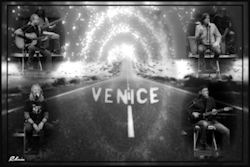
This is the usual beginning of conversations I have had with friends before I go to Venice. They assume I am taking a trip to the Italian city. Although I live in the Netherlands and there are people who travel to neighboring European countries for a few hours of business and pleasure, my pocketbook does not allow me to do so. It does however allow me to go to a neighboring city to see the group Venice perform. Venice is a group made up of four related men – two pairs of brothers which makes everyone cousins.
How we are introduced to songs depends on what is played on radios, televisions and even in movies. The first time I heard their song Family Tree it was not sung by Venice but by a woman at a Christmas party. The words she sang related the exact feelings I had towards the death of my sister. Never before was I so compelled to find out the name of the artist who recorded the song and what it sounded like when they sang it.
I remember asking, “Elly, what a beautiful song. Who recorded it?”
“Venice! They are an American folk rock group from Venice California and are well known here in the Netherlands.” She answered.
Since I was born in New York and only lived in the Netherlands for the past ten years, I thought it strange that if they were from America and well known why I had never heard of them.
I surfed the net and wound up on a Myspace profile. There I found a video of them singing Stuck in the Middle With You a song sung by Joe Egan and Gerry Rafferty and performed by their band Stealers Wheel. I knew the song from my sister’s car radio from when we drove through the mountains of New York on our way to ski trips. We always turned it up so it was blaring. I was ten then and now liked the way the familiar song sounded with the voices from Venice.
As the song played, it also caught my husband’s ear and he said, “That’s not the Stealers Wheel. Who is that?”
I answered, “Venice.” And wondered - he was born here so why doesn’t he know who they are.
He again said, “Who?” He goggled them and logged onto their website Venice Central. Within the hour he ordered their Two Meters Sessions CD.
I kept surfing and wound up on Youtube where I was amazed by one particular video version of The Family Tree. In it was Jeffery Banks the life partner of band member Mark Lennon, signing the song for the audience. Jeffery was introduced as being the youngest of four children born to deaf parents. As a result, he was able to sign before he could verbally speak.
I had never seen a song signed before but what an awesome concept it is. It is known that deaf people hear by feeling the vibrations of music but they don’t know the words of songs unless they read the words somewhere or know sign language and are lucky enough to have a song signed. Therefore including the text to songs in CDs should be standard as well as having people at concerts who sign. Sounds strange because usually deaf people don’t go to concerts but isn’t that the fault of the producers of concerts? If signing became the norm and this was publicized, an even bigger audience might be the result.
The CD my husband ordered arrived the day after and I have been playing it ever since. Five days later, our then seven-year-old son had his favorite song – Never Coming Back.
It was a year after we were introduced to their music that we went to Venice in the Netherlands. They were performing in the town next to the one we live in. It was an acoustic concert so it seemed like we were all sitting in someone’s living room. After the show we had the pleasure of meeting Michael, Kipp, Mark and Pat Lennon. It was in talking with them that I learned they were related to the Lennon Sisters who my parents loved to watch on the Lawrence Welk Show. The same Lennon Sisters I had met twelve years prior in Branson Missouri.
No matter what part of the world you’re in music carries the stories that become our life’s songs and from those songs come the stories of our lives.
“Really? For how long?”
“About three hours.”
This is the usual beginning of conversations I have had with friends before I go to Venice. They assume I am taking a trip to the Italian city. Although I live in the Netherlands and there are people who travel to neighboring European countries for a few hours of business and pleasure, my pocketbook does not allow me to do so. It does however allow me to go to a neighboring city to see the group Venice perform. Venice is a group made up of four related men – two pairs of brothers which makes everyone cousins.
How we are introduced to songs depends on what is played on radios, televisions and even in movies. The first time I heard their song Family Tree it was not sung by Venice but by a woman at a Christmas party. The words she sang related the exact feelings I had towards the death of my sister. Never before was I so compelled to find out the name of the artist who recorded the song and what it sounded like when they sang it.
I remember asking, “Elly, what a beautiful song. Who recorded it?”
“Venice! They are an American folk rock group from Venice California and are well known here in the Netherlands.” She answered.
Since I was born in New York and only lived in the Netherlands for the past ten years, I thought it strange that if they were from America and well known why I had never heard of them.
I surfed the net and wound up on a Myspace profile. There I found a video of them singing Stuck in the Middle With You a song sung by Joe Egan and Gerry Rafferty and performed by their band Stealers Wheel. I knew the song from my sister’s car radio from when we drove through the mountains of New York on our way to ski trips. We always turned it up so it was blaring. I was ten then and now liked the way the familiar song sounded with the voices from Venice.
As the song played, it also caught my husband’s ear and he said, “That’s not the Stealers Wheel. Who is that?”
I answered, “Venice.” And wondered - he was born here so why doesn’t he know who they are.
He again said, “Who?” He goggled them and logged onto their website Venice Central. Within the hour he ordered their Two Meters Sessions CD.
I kept surfing and wound up on Youtube where I was amazed by one particular video version of The Family Tree. In it was Jeffery Banks the life partner of band member Mark Lennon, signing the song for the audience. Jeffery was introduced as being the youngest of four children born to deaf parents. As a result, he was able to sign before he could verbally speak.
I had never seen a song signed before but what an awesome concept it is. It is known that deaf people hear by feeling the vibrations of music but they don’t know the words of songs unless they read the words somewhere or know sign language and are lucky enough to have a song signed. Therefore including the text to songs in CDs should be standard as well as having people at concerts who sign. Sounds strange because usually deaf people don’t go to concerts but isn’t that the fault of the producers of concerts? If signing became the norm and this was publicized, an even bigger audience might be the result.
The CD my husband ordered arrived the day after and I have been playing it ever since. Five days later, our then seven-year-old son had his favorite song – Never Coming Back.
It was a year after we were introduced to their music that we went to Venice in the Netherlands. They were performing in the town next to the one we live in. It was an acoustic concert so it seemed like we were all sitting in someone’s living room. After the show we had the pleasure of meeting Michael, Kipp, Mark and Pat Lennon. It was in talking with them that I learned they were related to the Lennon Sisters who my parents loved to watch on the Lawrence Welk Show. The same Lennon Sisters I had met twelve years prior in Branson Missouri.
No matter what part of the world you’re in music carries the stories that become our life’s songs and from those songs come the stories of our lives.
Wednesday, January 20, 2010
A Writer Writes
Today I am thinking about what makes a writer a writer.
A writer is someone who writes right?
If that’s the case, why do the people who read what I wrote say, “You should be a writer.”
I looked up the definition of writer and found these statements:
1 - A person who writes or is able to write
2 - A person who commits his or her thoughts, ideas, etc., to writing
3 - A person engaged in writing books, articles, stories, etc., esp. as an occupation or profession; an author or journalist
For my thinking process, I analyzed each: A person who writes or is able to write – Although I have been told I can be an animal at times, I am a person. Check!
My handwriting due to my disability is illegible but the typing diploma I received from LaGuardia Community College at age five is proof of compensation. I hand type instead of hand write. Is typing then writing? Back to the dictionary - Writing: that which is written; characters or matter written with a pen or the like. “The like” is the keyboard so check!
So far so good, the next statement was: A person who commits his or her thoughts, ideas, etc., to writing. As I said, I am thinking so therefore I have thoughts and ideas and am writing this blog so again check!
The last is where it gets a bit tricky: A person engaged in writing books, articles, stories, etc., esp. as an occupation or profession; an author or journalist. From the time I learned to put words together I have been writing songs, and poems. In high school I wrote articles for the school newspaper and of course in college I wrote the required research papers with which I earned a Bachelor of Arts degree. I volunteered my time as editor of a newspaper that advocates for the disabled and developed Martensnetwork, an in-depth website depicting what life with a disability is like. I also had a poem published in an anthology.
Doesn’t all this mean I am a writer or does money have to be my reward? The definition did say occupation or profession. Is this where I fall short of being a writer? Ok I admit it who wouldn’t want the big payoff for their talent of being able to relate an idea by way of story or the ability to report daily happenings from whatever part of the world they are in and then return home to money in the bank.
Money however is not the only reward for using one’s talents to the best of their ability. Reward is when your poem is chosen out of 200 others, to be published. It’s having your thesis be used as a teaching guide for college students. One of my greatest rewards was being interviewed for Associated Content by Kat Mitschke after she read something I wrote about being a disabled mother.
Is the payoff the paycheck or is it people knowing the name of an author and saying, “What a great writer he or she is.” What happens then to all the writers that became famous after their deaths? Anne Frank had no idea her diary would become a book that has been translated into forty languages. How big was her book deal? She’ll never know!
Come to think of it the market for traditional published text is decreasing daily. Years ago you could buy a newspaper for twenty-five cents. Now they cost a dollar on weekdays and two dollars on weekends. Book and magazine prices have also done nothing but increase. Not only is the internet responsible for all this but those writers who are publishing and marketing themselves.
Therefore, when people say, “You should be a writer.” They mean I should market and publish my writings because then people would know me and what I think about. For them fame and fortune is what defines a writer.
Using words to express my thoughts, ideas and experiences and have people read them, make them think, feel and somehow make a difference is why this writer writes.
To those who have read my works and said, “You should write a book.”
That’s another story!
A writer is someone who writes right?
If that’s the case, why do the people who read what I wrote say, “You should be a writer.”
I looked up the definition of writer and found these statements:
1 - A person who writes or is able to write
2 - A person who commits his or her thoughts, ideas, etc., to writing
3 - A person engaged in writing books, articles, stories, etc., esp. as an occupation or profession; an author or journalist
For my thinking process, I analyzed each: A person who writes or is able to write – Although I have been told I can be an animal at times, I am a person. Check!
My handwriting due to my disability is illegible but the typing diploma I received from LaGuardia Community College at age five is proof of compensation. I hand type instead of hand write. Is typing then writing? Back to the dictionary - Writing: that which is written; characters or matter written with a pen or the like. “The like” is the keyboard so check!
So far so good, the next statement was: A person who commits his or her thoughts, ideas, etc., to writing. As I said, I am thinking so therefore I have thoughts and ideas and am writing this blog so again check!
The last is where it gets a bit tricky: A person engaged in writing books, articles, stories, etc., esp. as an occupation or profession; an author or journalist. From the time I learned to put words together I have been writing songs, and poems. In high school I wrote articles for the school newspaper and of course in college I wrote the required research papers with which I earned a Bachelor of Arts degree. I volunteered my time as editor of a newspaper that advocates for the disabled and developed Martensnetwork, an in-depth website depicting what life with a disability is like. I also had a poem published in an anthology.
Doesn’t all this mean I am a writer or does money have to be my reward? The definition did say occupation or profession. Is this where I fall short of being a writer? Ok I admit it who wouldn’t want the big payoff for their talent of being able to relate an idea by way of story or the ability to report daily happenings from whatever part of the world they are in and then return home to money in the bank.
Money however is not the only reward for using one’s talents to the best of their ability. Reward is when your poem is chosen out of 200 others, to be published. It’s having your thesis be used as a teaching guide for college students. One of my greatest rewards was being interviewed for Associated Content by Kat Mitschke after she read something I wrote about being a disabled mother.
Is the payoff the paycheck or is it people knowing the name of an author and saying, “What a great writer he or she is.” What happens then to all the writers that became famous after their deaths? Anne Frank had no idea her diary would become a book that has been translated into forty languages. How big was her book deal? She’ll never know!
Come to think of it the market for traditional published text is decreasing daily. Years ago you could buy a newspaper for twenty-five cents. Now they cost a dollar on weekdays and two dollars on weekends. Book and magazine prices have also done nothing but increase. Not only is the internet responsible for all this but those writers who are publishing and marketing themselves.
Therefore, when people say, “You should be a writer.” They mean I should market and publish my writings because then people would know me and what I think about. For them fame and fortune is what defines a writer.
Using words to express my thoughts, ideas and experiences and have people read them, make them think, feel and somehow make a difference is why this writer writes.
To those who have read my works and said, “You should write a book.”
That’s another story!
Tuesday, January 12, 2010
Best Friends Never Die
Have you ever moved and in the process lost something precious and dear to you like a favorite doll, teddy or toy and you can’t for the life of you figure out how it could be gone or where it went? One minute you were holding on to it for dear life and the next you have no clue what happened to it. I have but it wasn’t a plaything it was my best friend I lost the day she moved away.
We were five year old kids in grade school, with the same disability cerebral palsy, we went to the same school and lived in the same town. After school we’d talk on the phone for so long that my father would say, “You spent the whole day together, what can you possibly have to talk about? Hang up the phone! I need to use it!” He didn’t always have to use it but our phone bill was high. An hour later Eva would call me and we’d talk until bedtime. In school Eva was shier than shy and only talked to me. Her seat was next to mine and although I was the one with the speech impairment, she’d whisper in my ear whenever she wanted something. Our teacher would say, “Eva, look at me and tell me what you want.” I was her voice and always answered for her. Eva always thanked me with a smile.
Weekends were spent at her house. She had two sisters and a brother so there was always something going on there. For summer vacations we went to camp together. We basically did everything together. If I had it my way I’d have her habits too! She had this strange one of not eating the skin of frankfurters. I remember eating there and my mom saying to me, “Don’t even think about it – I’m not going to peel the skin off your frankfurters just because Eva eats them that way. You will also continue to eat the crust on your bread!”
We were starting our teen years when all this changed in 1977. Eva’s parent’s decided to pack up everything and leave Glendale, Queens to start a new life in California. I can still see the enclosed front porch once cluttered with the toys and bikes of the four Munson children, empty. “Where did all your stuff go?” I asked on my last visit. We didn’t have anything to play with that day so we sat on her front steps and watched her parents and my parents, pack everything into the back of their car and moving truck. When everything was loaded up we all exchanged hugs as once by one they got into they’re car. Hugging me, Eva said what all good friends say when they move away, “I’ll write and send you my address.”
I waited and waited and then the promised letter came in 1983. In it was a short note saying she liked living in California and she was doing fine. There was a high school photo enclosed but no return address. I was dying to send her my high school photo. Through my tears I asked my mom, “Now what? How do I write back? She sent me her picture but how do I send her mine?”
“I don’t understand it. You two were such good friends.” Were the only words she had. She was as lost as I was. There was nothing else left for me to do but wait for the day I’d hear from her again.
Four years later we moved from Glendale to Long Island so any mail that might have come after the six month postal forwarding time was lost. Our address and phone number were no longer the same. I realized there was no way Eva could find me anymore and I began to wonder how I could find her.
In 1988 I went back to Queens for a Young Adults weekend retreat at the Bishop Malloy retreat house. It there I met a man who through our sense of humor, I just “clicked” with. Although I had assigned help from a woman also on retreat and a nun, Rex took it upon himself to push me where I wanted to go and sat with me to help me eat. In talking with him, I learned he lived on 68th street in Glendale, just a few doors away from the Munsons. He too had known them as a kid and lost touch with them. “The last I remember they were living somewhere in Van Nuys, California. I’ll send you the address when I get home.” I was so excited about this that it was the first thing I told my parents when they came to pick me up. A week later I had an address, wrote to it and enclosed my college photo.
Nothing came – not from Eva or from Rex but I couldn’t give up and decided I wouldn’t until I knew where she was. I tried looking up an Eva Munson on Switchboard.com in Van Nuys. There was one listed but when I dialed the number I got a recording that said the number had been disconnected. I then tried a few others listed for the state of California but they told me I had the wrong number – they never lived in New York.
It then dawned on me that Eva might have married and wasn’t using the name Munson anymore. I married an ITer in 1999 and told him about my search. He joined me looking on Google and various genealogy sites but through the years, all lead to dead ends. He suggested making a profile on Myspace a social networking site which I did by writing a blog about myself. Of course Eva was mentioned in it. I figured if she or someone she knew saw it they would contact me. Again no luck, just a few hundred “friends” I didn’t know.
In the spring of 2009 a friend introduced me to Facebook. Myspace was too impersonal and although I kept my profile active, I had lost interest in it. On Facebook I found many of my real-life friends. Two of them even lived on my block when growing up in Glendale. It was while looking at one of their profiles that I saw a familiar name and face. It was Rex! He too moved from Glendale and was living in another state. I sent my friend a message asking if he was the same man that lived on 68th street and was at the retreat house. It was and she had also known him when we were kids. The strange thing is although we had these friends in common and spend a lot of time at their houses, we don’t remember each other from there.
Once I had my profile set up I looked for all the Munsons listed. I wrote each of them the following:
Hi, I am searching for a woman whose name is the same as yours. She is in her 40s now. She was my best friend in grade school. Her parent’s names were Fred and Evelyn Munson. She had two sisters, Coleen, Heather and a brother Ricky. They were from Queens New York and moved to California. I hope you don't mind me asking if you could ask people in your family if they'd ever heard of these Munson's. I'd greatly appreciate your help.
While some would not respond, others would explain they did not have a connection to New York. I was at a complete and total loss! I would watch TV shows that found “missing” people and comment to my husband, “I don’t get it – how the heck do they find people and why can’t we find Eva?” His reply was, “If we had the money, I’d hire a private investigator for you.”
On January 5, 2010 I had to sign into Myspace – I needed some info from a blog. While I was in there I checked the messages in my inbox. This is what I saw:
Subject: This is Eva Munson from Glendale NY
Message: Hi. This is Eva’s sister Heather. Just a little update Eva passed away May 12 2009 she has two girls we all often think about you glad to see you’re doing good would love to hear from you.
It was dated July 20, 2009 – my birthday. What a gift! This is what I sent back:
My god Heather!!! I just found your email and noticed it was dated July 20th 2009. My birthday! You have given me such a gift. Although I am saddened beyond words that Eva isn't in this world anymore - I finally know where she is! I cannot tell you how much I have missed her since you all moved to California. So many times I tried to find her! She was really my best friend growing up!! She and your family will always be in my heart. How did you ever find me?? I haven't been on Myspace in ages and just signed on today. I hope we can keep in touch. Please email me and tell me more about your family your folks, Ricky and Colleen. Do you have a photo of Eva I could please have? Thank you soooooo much for writing me! You don't know how much it means to hear from you! All my love, Christine
I immediately sent a message to Rex. Then in the silence of my living room, I cried and asked why. Why did it take so long? Why couldn’t I find her? Why didn’t she find me? Why couldn’t we stay in touch? Why did she have to die at age 44?
Just two weeks before I was showing my parents all the friends I found on Facebook. My mother asked me if I ever heard from the Munsons. “What a shame.” You two were such good friends.” She said as I cried.
They say, “God works in mysterious ways” – they’re not kidding! All those years ago I thought Rex would be the one to help me find Eva and her family but as it turns out I was able to help him find them. This gives me such a feeling of happiness. I also have the peace of knowing where Eva is – in my heart where she always was and will be!
We were five year old kids in grade school, with the same disability cerebral palsy, we went to the same school and lived in the same town. After school we’d talk on the phone for so long that my father would say, “You spent the whole day together, what can you possibly have to talk about? Hang up the phone! I need to use it!” He didn’t always have to use it but our phone bill was high. An hour later Eva would call me and we’d talk until bedtime. In school Eva was shier than shy and only talked to me. Her seat was next to mine and although I was the one with the speech impairment, she’d whisper in my ear whenever she wanted something. Our teacher would say, “Eva, look at me and tell me what you want.” I was her voice and always answered for her. Eva always thanked me with a smile.
Weekends were spent at her house. She had two sisters and a brother so there was always something going on there. For summer vacations we went to camp together. We basically did everything together. If I had it my way I’d have her habits too! She had this strange one of not eating the skin of frankfurters. I remember eating there and my mom saying to me, “Don’t even think about it – I’m not going to peel the skin off your frankfurters just because Eva eats them that way. You will also continue to eat the crust on your bread!”
We were starting our teen years when all this changed in 1977. Eva’s parent’s decided to pack up everything and leave Glendale, Queens to start a new life in California. I can still see the enclosed front porch once cluttered with the toys and bikes of the four Munson children, empty. “Where did all your stuff go?” I asked on my last visit. We didn’t have anything to play with that day so we sat on her front steps and watched her parents and my parents, pack everything into the back of their car and moving truck. When everything was loaded up we all exchanged hugs as once by one they got into they’re car. Hugging me, Eva said what all good friends say when they move away, “I’ll write and send you my address.”
I waited and waited and then the promised letter came in 1983. In it was a short note saying she liked living in California and she was doing fine. There was a high school photo enclosed but no return address. I was dying to send her my high school photo. Through my tears I asked my mom, “Now what? How do I write back? She sent me her picture but how do I send her mine?”
“I don’t understand it. You two were such good friends.” Were the only words she had. She was as lost as I was. There was nothing else left for me to do but wait for the day I’d hear from her again.
Four years later we moved from Glendale to Long Island so any mail that might have come after the six month postal forwarding time was lost. Our address and phone number were no longer the same. I realized there was no way Eva could find me anymore and I began to wonder how I could find her.
In 1988 I went back to Queens for a Young Adults weekend retreat at the Bishop Malloy retreat house. It there I met a man who through our sense of humor, I just “clicked” with. Although I had assigned help from a woman also on retreat and a nun, Rex took it upon himself to push me where I wanted to go and sat with me to help me eat. In talking with him, I learned he lived on 68th street in Glendale, just a few doors away from the Munsons. He too had known them as a kid and lost touch with them. “The last I remember they were living somewhere in Van Nuys, California. I’ll send you the address when I get home.” I was so excited about this that it was the first thing I told my parents when they came to pick me up. A week later I had an address, wrote to it and enclosed my college photo.
Nothing came – not from Eva or from Rex but I couldn’t give up and decided I wouldn’t until I knew where she was. I tried looking up an Eva Munson on Switchboard.com in Van Nuys. There was one listed but when I dialed the number I got a recording that said the number had been disconnected. I then tried a few others listed for the state of California but they told me I had the wrong number – they never lived in New York.
It then dawned on me that Eva might have married and wasn’t using the name Munson anymore. I married an ITer in 1999 and told him about my search. He joined me looking on Google and various genealogy sites but through the years, all lead to dead ends. He suggested making a profile on Myspace a social networking site which I did by writing a blog about myself. Of course Eva was mentioned in it. I figured if she or someone she knew saw it they would contact me. Again no luck, just a few hundred “friends” I didn’t know.
In the spring of 2009 a friend introduced me to Facebook. Myspace was too impersonal and although I kept my profile active, I had lost interest in it. On Facebook I found many of my real-life friends. Two of them even lived on my block when growing up in Glendale. It was while looking at one of their profiles that I saw a familiar name and face. It was Rex! He too moved from Glendale and was living in another state. I sent my friend a message asking if he was the same man that lived on 68th street and was at the retreat house. It was and she had also known him when we were kids. The strange thing is although we had these friends in common and spend a lot of time at their houses, we don’t remember each other from there.
Once I had my profile set up I looked for all the Munsons listed. I wrote each of them the following:
Hi, I am searching for a woman whose name is the same as yours. She is in her 40s now. She was my best friend in grade school. Her parent’s names were Fred and Evelyn Munson. She had two sisters, Coleen, Heather and a brother Ricky. They were from Queens New York and moved to California. I hope you don't mind me asking if you could ask people in your family if they'd ever heard of these Munson's. I'd greatly appreciate your help.
While some would not respond, others would explain they did not have a connection to New York. I was at a complete and total loss! I would watch TV shows that found “missing” people and comment to my husband, “I don’t get it – how the heck do they find people and why can’t we find Eva?” His reply was, “If we had the money, I’d hire a private investigator for you.”
On January 5, 2010 I had to sign into Myspace – I needed some info from a blog. While I was in there I checked the messages in my inbox. This is what I saw:
Subject: This is Eva Munson from Glendale NY
Message: Hi. This is Eva’s sister Heather. Just a little update Eva passed away May 12 2009 she has two girls we all often think about you glad to see you’re doing good would love to hear from you.
It was dated July 20, 2009 – my birthday. What a gift! This is what I sent back:
My god Heather!!! I just found your email and noticed it was dated July 20th 2009. My birthday! You have given me such a gift. Although I am saddened beyond words that Eva isn't in this world anymore - I finally know where she is! I cannot tell you how much I have missed her since you all moved to California. So many times I tried to find her! She was really my best friend growing up!! She and your family will always be in my heart. How did you ever find me?? I haven't been on Myspace in ages and just signed on today. I hope we can keep in touch. Please email me and tell me more about your family your folks, Ricky and Colleen. Do you have a photo of Eva I could please have? Thank you soooooo much for writing me! You don't know how much it means to hear from you! All my love, Christine
I immediately sent a message to Rex. Then in the silence of my living room, I cried and asked why. Why did it take so long? Why couldn’t I find her? Why didn’t she find me? Why couldn’t we stay in touch? Why did she have to die at age 44?
Just two weeks before I was showing my parents all the friends I found on Facebook. My mother asked me if I ever heard from the Munsons. “What a shame.” You two were such good friends.” She said as I cried.
They say, “God works in mysterious ways” – they’re not kidding! All those years ago I thought Rex would be the one to help me find Eva and her family but as it turns out I was able to help him find them. This gives me such a feeling of happiness. I also have the peace of knowing where Eva is – in my heart where she always was and will be!
Subscribe to:
Posts (Atom)